Estimated reading time: 9 minutes
Last Updated:
Work-related travel expenses are costs you incur while travelling for work, separate from your regular commute. If you travel for work and pay out of pocket for transport, accommodation, or meals, you may be able to claim those costs as a tax deduction on your Australian tax return. Read on to find out exactly what qualifies, what records you need to keep, and how to make the most of your claim.
Key Takeaways
- You can claim work-related travel costs, including transport, accommodation, and meals, but your regular commute to and from work is not claimable.
- If you receive a travel allowance, it counts as taxable income, and you can only claim deductions for what you actually spent.
- Keeping records and receipts is essential. The ATO can ask for proof of any expense you claim.
- If a work trip includes personal time, you need to split it, and only the work portion is deductible.
- There are important rules around when you need a travel diary, so check if your trip qualifies.
Here’s how to turn work-related travel expenses into refund dollars at tax time.
What is a work-related travel expense?
If you travel for work, you can usually claim any purchases related to that travel as a work-related travel expense on your tax return. Let’s break down what you can and cannot claim.
What work-related travel expenses can I claim?
The following travel-related expenses are tax deductible ifyou are eligible to claim them (check eligibility rules further down this page):
- Accommodation
- Air, bus, train and taxi/rideshare fares
- Bridge and road tolls
- Parking fees
- Car hire charges
- Meals (if your travel included an overnight stay)
- Bags used only for work travel
- Incidental expenses (laundry, etc.)
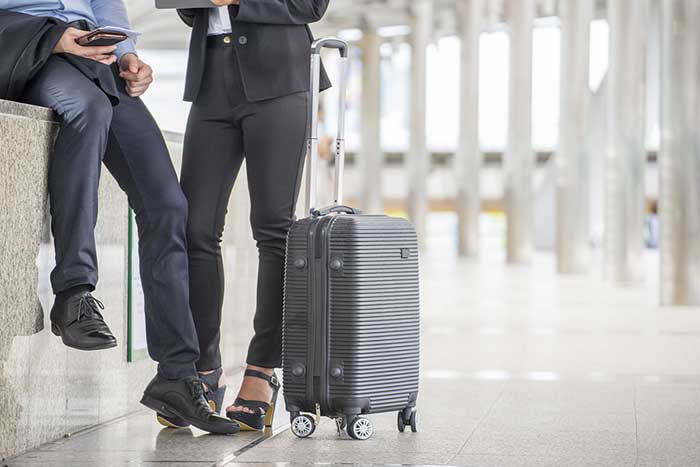
If you purchase a bag or suitcase for your work-related travel, don’t forget to claim it as a travel expense on your tax return!

Can I claim work-related driving costs or public transport?
Allowable claims:
- Travel between two separate workplaces (or jobs).
- Travel from your workplace to offsite meetings or events.
- Travel from your home to an alternative workplace if required.
- If you work at more than one location for the same employer, you can claim the cost of travelling between locations.
Travel you can’t claim:
- The cost of travel from home to your everyday place of work (and back again).
- If you run an errand on the way to or from work e.g. pick up the mail or a package.
- If you work overtime or out of hours.
- When your home is your place of work for one job, and you travel to a different location to work another job.

Is car parking a travel expense?
Yes. You can claim for work-related parking expenses as long as the trip fits into the ‘allowable claims’ list above.
For example, say you drive to an out-of-office company meeting or event and you use your own car. You can claim the trip and the parking costs.
However, you can’t claim the cost of normal, everyday parking if you drive to work and pay for parking near your workplace.
Important: You can’t claim any car or parking expenses if you were reimbursed by your employer.

Do I need to keep a travel diary?
If you are away from home for more than 6 consecutive nights, keep a travel diary. Record where you were, what you were doing and the start and end times of each activity.
Example travel diary entries:
Monday:
- 6:00am Flight to Sydney – arrive 8:30am
- 8:30am – 9:00am Uber from Sydney Airport to Darling Harbour
- 9:30am – 4:00pm Trade Conference
- Overnight at The Hyatt, Darling Harbour.
If you don’t have a travel diary handy, no problem! Download a travel diary template from the Etax Downloadable Resources page.
It’s a good idea to keep a record of your travel and expenses, even when the diary rule doesn’t apply. It’s very easy to forget details about expenses months after they happen and this can cost you at tax time!

What about my travel allowance? Is it taxable?
If you receive a travel allowance from your employer, the ATO usually treats it as taxable income and it appears on your income statement. This means you include it as taxable income on your tax return.
The good news is that, as long as you spent the money you were paid as a travel allowance, you can claim a tax deduction against it at tax time.
A common mistake is assuming you can claim the entire allowance as a tax deduction even if you didn’t spend it all, but this isn’t necessarily the case.
You can only claim the total amount you spent on work-related travel. For example, say your employer paid you $1,500 in travel allowances, but your actual travel costs were $1,000. You can only claim $1,000.
Important: Only claim travel deductions you have evidence for, as the ATO can ask for proof for any of your expenses.

What travel records should I keep?
You should keep all travel expense records and receipts, even if you receive an allowance. It’ll help ensure you claim everything you’re entitled to at tax time.
Remember, if you’re not sure whether you can claim an expense, keep the receipt and ask your Etax accountant.
Don’t forget the motto: You can’t claim it if you can’t prove it!
Photograph your receipts and keep everything in one folder. Create a backup folder to make sure you don’t lose them.
Etax clients can upload travel expense receipts straight into their secure online account at etax.com.au. That way everything is ready and waiting in their account at tax time!
Can I claim travel if the trip includes a holiday?
If you combine work and leisure on a trip, you need to split your expenses the same way. There are two key rules here:
- The primary purpose of your trip must be work related, and
- You can’t claim any part of a trip that is not work related.
Example: Work Conference in Another State
Julie travelled to Melbourne for a week-long conference. She then stayed in Melbourne on Friday and Saturday night to see the sights and catch up with friends.
Julie can claim in full:
- Accommodation costs for Monday to Friday.
- Uber fares from the hotel to the conference and back each day.
- Meals during the week.
Julie was away for 7 days. Of those, 5 days (71.4%) of the trip was work related. She can also claim 71.4% of:
- Her flights to and from Melbourne.
- Her Ubers to and from the airports.
Julie can’t claim leisure expenses:
- Accommodation costs for Friday and Saturday night.
- Meals from Friday night to Sunday.
- Uber trips to her friend’s house.
- Car hire and expenses for a trip she made to the Great Ocean Road.
Here are some more examples of expenses the ATO won’t allow:
- If you travel with your partner or children, you can’t claim any of their travel or accommodation costs.
- An add-on flight that is not related to your work trip. For example: If you had a work trip in Mackay, you can’t claim a flight you took to visit Cairns after your work in Mackay finished.
- Attending a small work event while on holiday. For example: You are on holiday for 3 weeks in Europe and while you’re there you attend a 2-day work-related conference. You can claim the costs of the conference. However, you can’t claim any travel or accommodation costs related to the trip because the trip’s primary purpose is a holiday, not business.
Frequently asked questions
If you primarily work from home and then travel to another location for work, that travel may be claimable. If your home is your base for one job and you travel to a second job, those costs are generally not deductible.
Yes. You should keep receipts and records for all work-related travel costs, even if you receive a travel allowance. The ATO can request proof for any deduction, so it pays to keep everything organised.
No. If your employer has already reimbursed you for a travel expense, you cannot also claim it as a tax deduction. You can only claim costs you paid yourself.
If you are away from home for more than six consecutive nights, you must keep a travel diary. This should record your location, activities, and the start and end times of each work-related activity.
If work is the main reason for travelling, you can generally claim a portion of your flights based on the percentage of days spent on work. If the trip is primarily a holiday, you cannot claim your flights.
If you have any questions regarding your work-related travel expenses, feel free to get in touch. Our accountants are always happy to set you on the right track for the best possible tax refund!
More posts about tax deductions: