Estimated reading time: 8 minutes
Last Updated:
Key Takeaways
- Australia’s tax-free threshold lets you earn up to $18,200 a year before you start paying tax.
- Have two jobs at once? Claiming the threshold on both can leave you with a surprise tax bill at year end.
- Earning under the threshold doesn’t always mean you don’t need to lodge a tax return.
- Changed jobs through the year? There’s one simple step to avoid accidentally double-claiming the threshold.
- Part-year residents and non-residents follow different threshold rules.
What is the tax free threshold?
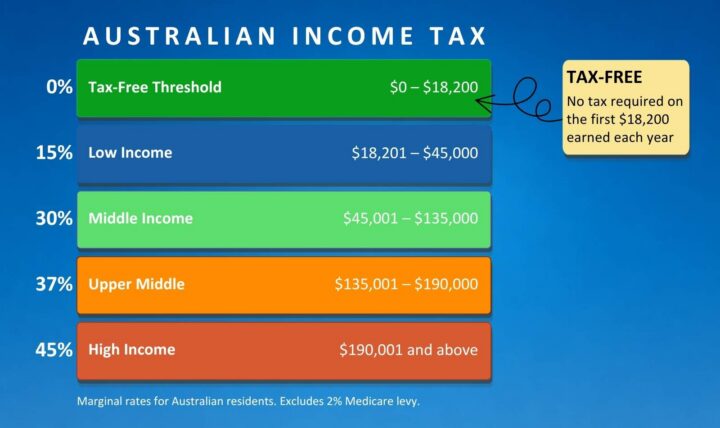
The tax-free threshold is the amount of income an Australian resident can earn before they start paying income tax. For residents, the tax-free threshold is the first $18,200 you earn between 1 July and 30 June, regardless of which employer you earned it from.
Note: The ATO’s definition of ‘income’ is money you earn from all jobs and other sources.
This includes:
- salary or wages from an employer
- money from a business or contracts
- interest earned on bank accounts
- investment income such as dividends from shares or any other capital gains
Should I claim the tax free threshold?
Generally, yes. By claiming the tax free threshold, you don’t pay tax on the first $18,200 you earn during the financial year.
What if I earned more than $18,200?
If your income for the year was more than $18,200, you must lodge a tax return. Once your earnings go over the threshold, you start paying tax on the portion above it, based on your income tax bracket. See our income tax rates page for the current brackets.
What happens if I don’t claim the tax free threshold?
By ticking “no” on your Tax Declaration Form, your employer generally withholds more tax from your pay. This means you receive less money in your pocket each payday. At tax time, the ATO will calculate your tax, based on your total earnings, and refund any excess tax withheld, if you’re entitled to a refund.
Do I claim the threshold for a second job?
No, if you have two jobs at the same time and expect your total income to be more than $18,200, you would generally claim the tax-free threshold from only one employer. This is usually the employer that pays you the most.
If you claim it on both jobs, that means you wouldn’t pay tax on the first $36,400 you earned, instead of just the first $18,200. This means you would owe the ATO tax on the additional $18,200 income at tax time.
If you’re certain your total income from all jobs will be $18,200 or less for the financial year, the ATO allows you to claim the threshold from more than one payer.
Make sure only one employer claims the tax-free threshold for you. Otherwise, you could end up owing money to the ATO.
An employer doesn’t know how much you earned, or how much tax your other employers withhold. That’s why it’s your responsibility to make sure only one employer claims the tax free threshold for you.
The money you earn above the tax free threshold, you pay a percentage of tax based on your income tax bracket. This is why it’s important to only claim the threshold once – earning from two jobs could push you into a higher tax bracket, meaning your employer should be deducting more tax from your pay.
What should I do when I change jobs?
When you change jobs during the financial year, you can claim the tax-free threshold from your new employer straight away, provided you no longer work for your old employer.
Once your former employer stops paying you, you are no longer claiming the tax-free threshold from them. You can tell your new employer that you want to claim it when you complete your Tax File Number Declaration Form.
This does not apply if you have multiple jobs at the same time. If you work two jobs at the same time, you should only claim the tax free threshold on one of the jobs.
Do I need to lodge a tax return if I earned less than the tax free threshold?
If you earned under $18,200 in total for the financial year, but still paid tax:
Yes, if tax was withheld from your pay, you’ll generally need to lodge a tax return to claim any tax refund you’re entitled to.
Even though you earned below the tax-free threshold, you should file a tax return because you paid tax. You’ll likely get all of the tax you paid that year back from the ATO, after you lodge your tax return.
Want that money in your account as soon as possible? Click here to start your tax return now.
If you earned under $18,200 and paid no tax:
Good news! If you earned less than $18,200 and you didn’t pay any tax on this income, then you probably won’t need to lodge a tax return this year.
In most cases of this type, you won’t need to lodge a return, but you still need to do a ‘Non-Lodgement Advice’. These are free to submit through Etax.
Please note, the above rules apply only to Australian tax returns.
What is a Non-Lodgement Advice?
A Non-Lodgement Advice (NLA) is a document that tells the ATO that you don’t need to lodge a return that year. If you don’t tell the ATO, they will assume you have an outstanding tax return. This will put you on their overdue list.
You may still need to lodge a tax return if you:
- earned interest from your bank accounts
- are entitled to the private health insurance rebate
- had a reportable fringe benefits amount on your income statement/PAYG Summary
- had a reportable employer superannuation contribution on your income statement/PAYG Summary
- made a capital loss or can claim a loss made in a previous year
- were an Australian resident for tax purposes and you had exempt foreign employment income plus $1 or more of other income
- are required to lodge a tax return by another government body like Centrelink.
NLAs are free to submit through Etax. Simply register online, enter your income and deduction details, and our accountants will match this against ATO records. If you don’t need to lodge a full tax return, we’ll submit an NLA on your behalf, at no cost.
Example: Claiming the tax free threshold twice:
Jimmy works part-time as a café barista and casually as a server for a catering business. He claims the tax free threshold from both employers. At the café, Jimmy earns $34,000 for the entire year. As a server, he earns $20,000.
On $54,000 of total taxable income, Jimmy’s 2026–27 income tax is:
- 15% on the income between $18,200 and $45,000 = $4,020
- 30% on the income between $45,000 and $54,000 = $2,700
- Total income tax = $6,720
If he claimed the tax free threshold on both jobs, Jimmy has accounted for only $2,640 of income tax:
| Café | Server | Total |
|---|---|---|
| Income: $34,000 | Income: $20,000 | Income: $54,000 |
| Tax Paid: $2,370 | Tax Paid: $270 | Tax Paid: $2,640 (incorrectly claiming the tax free threshold on both jobs) |
| Jimmy now owes: $4,080 to the ATO when lodging his tax return |
Rules for part-year and non-residents
If you became an Australian resident partway through the financial year, or stopped being one, you don’t get the full $18,200 tax free. Instead, the ATO sets a flat amount of $13,464, plus a remaining portion based on how many months you were a resident. This means your personal threshold could sit anywhere between roughly $13,464 and $18,200, depending on your circumstances.
If you’re not an Australian resident for tax purposes, you can’t claim the tax-free threshold. Non-residents are taxed from the first dollar they earn in Australia.
If you’re on a visa or you are a citizen of another country, you may still need to lodge a tax return in your home country. For example, US citizens and Green Card holders must file a US tax return every year, regardless of where they live or how much they earn. Etax cannot assist with US tax filings, but specialist providers such as Taxes for Expats can help Americans living in Australia meet their US tax obligations.
Frequently Asked Questions
The tax-free threshold is the amount you can earn each financial year before you start paying tax. In Australia, this is currently the first $18,200 you make. Income you earn above this is taxed based on your income tax bracket.
Yes, but only for the job you earn the most money from. If you change jobs during the financial year, only claim the tax free threshold from one employer at a time.
You can generally earn up to $18,200 in taxable income each financial year before income tax applies, provided you’ve claimed the tax-free threshold with your employer.
No. If your combined income from all jobs is more than $18,200, claim the threshold from only one employer, usually the one paying you the most.
You’ll likely underpay tax throughout the year. At tax time, the ATO adds up your total income and you will likely owe them money when you lodge your taxes.
If tax was withheld from your income, lodge a return to claim any tax refund you’re entitled to. If you paid no tax, you may only need a Non-Lodgement Advice instead.
A Non-Lodgement Advice is a form you submit to the ATO to let them know you don’t need to lodge a tax return for that financial year.
No. If you’re not a resident for tax purposes, the ATO taxes you from the first dollar you earn, with no tax-free threshold.
If you become an Australian resident for tax purposes partway through the year, you’ll generally receive a partial tax free threshold rather than the full $18,200.